
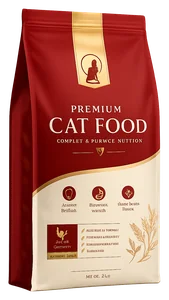
How do you choose a good cat food?
- Find the nutritional adequacy statement. It should say the food is complete and balanced and name the life stage: kitten (growth), adult maintenance or all life stages.
- Match your cat. Kittens, adults and seniors differ, as do cats with health conditions. Ask your vet before using special diets.
- Ask the manufacturer. The WSAVA guide suggests asking who formulates the diets, what quality control they use and whether nutrient analyses are available.
- Choose wet, dry or both based on your cat's needs and your budget; see wet vs dry food.
- Check the calorie content so you can measure portions accurately.
What does "premium" mean?
Nothing in particular. There is no official definition, so a high price or a fancy label does not prove a better diet. Judge by the adequacy statement and the company's transparency.
Do ingredients matter?
The overall formulation matters more than any single ingredient, and a long list of fashionable ingredients is not proof of quality. Look for a named animal protein source, and avoid changing foods suddenly.
Common mistakes
Feeding a food that is not complete and balanced as the only diet, picking by pretty packaging, and feeding by eye instead of measuring. Switch foods gradually over about a week.
How do kitten, adult and senior foods differ?
Kitten foods are higher in calories and certain nutrients to support growth, adult foods maintain a healthy weight, and senior foods are often adjusted for older cats. Some older cats lose weight and need more calories, so ask your vet before changing diet. See kitten care and senior cat care.
Should you choose grain-free or "natural" food?
Labels such as "natural", "holistic" and "human-grade" are marketing terms and do not guarantee better nutrition. Grain-free is not a medical requirement for most cats. Choose by the adequacy statement and your vet's advice rather than trends.
How do you store cat food safely?
Keep dry food in its original bag inside a sealed container, in a cool dry place, and use it before the best-before date. Refrigerate opened wet food in a covered container and use it within the time on the label, discarding food left in the bowl for hours.
How can you save money without lowering quality?
Compare cost per day rather than price per bag, using the calorie content and your cat's portion. Buy sizes you will finish before the date, and do not change brands often. Never cut costs by feeding a food that is not complete and balanced.
Ready to browse?
We do not test or rank products. Use the criteria above to compare options.
Search Amazon for cat food (opens in a new tab)We do not currently earn commission from this link. Affiliate disclosure