
NUTRITION
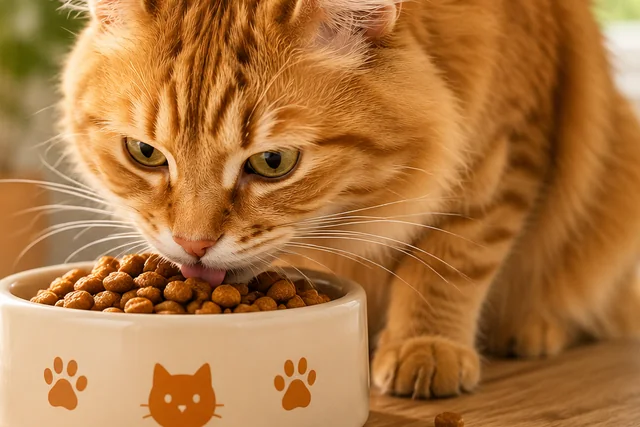
Cat nutrition starts with a complete and balanced diet made for cats, in measured portions, with plenty of fresh water. Match the food to your cat's life stage and ask your vet before using special diets.
Cats are obligate carnivores: they need nutrients found naturally in animal tissue, such as taurine, and a diet low in carbohydrate compared with many other pets. In practice, the simplest way to meet those needs is a commercial food labeled complete and balanced for your cat's life stage (kitten, adult or senior). Our wet vs dry food guide explains how to read the label.
Use the label's feeding guide as a starting point, then adjust to your cat's body condition. Most adult cats do well with two or more small meals a day, and some benefit from puzzle feeders. Weigh or measure portions, count treats in the daily total (a common rule of thumb is to keep them under about a tenth of daily calories) and ask your vet for a target weight.
Cats tend to drink little, so fresh water in several places helps, and wet food adds extra moisture. Some cats prefer a ceramic bowl or running water. If you notice a big change in how much your cat drinks or urinates, call your vet, as it can be an early sign of illness.
Do not feed onions, garlic, chocolate, alcohol or caffeine. Cooked bones can splinter. Many adult cats cannot digest milk well, so it can cause an upset stomach. If your cat eats something suspicious, call your vet or a pet poison helpline right away. Our health hub explains emergency signs.
Kittens need more energy and specific nutrients for growth. Adult cats need a diet that maintains a healthy weight. Many older cats need adjusted diets, and some need more calories because they lose muscle. Our guides to kitten care and senior cat care explain the differences.
Treats should stay a small share of daily calories, and supplements should only be given on a vet's advice. Table scraps can unbalance the diet and some human foods are unsafe, so keep them out.
You should feel the ribs under a thin layer of fat and see a waist when looking from above. If you cannot feel the ribs, or your cat has no waist, ask your vet about a weight plan. Extra weight raises the risk of diabetes and joint disease.