What should you look for?
- Size. A box about one and a half times your cat's body length lets your cat turn and dig comfortably. Many standard boxes are too small.
- Entry height. Kittens, seniors and arthritic cats need a low entry.
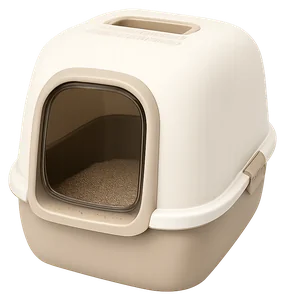
- Open or covered. Covers add privacy and reduce scatter, but trap smells and some cats dislike them. Watch your cat's reaction.
- Material. Smooth, scratch-resistant plastic is easier to clean; avoid anything with cracks.
- High sides help cats that spray or dig vigorously.
- Ease of cleaning. Fewer ridges and a wipeable surface save time.
How many do I need?
One per cat plus one extra, in different locations. See the full litter box guide for placement and cleaning.
What about self-cleaning boxes?
They can reduce scooping but are not suitable for every cat; some are frightened by the noise. If you try one, introduce it gradually, keep a standard box available and check that the safety sensors suit your cat's weight.
Common mistakes
Buying a box that is too small, covering a box for a cat that prefers open ones, putting boxes beside noisy appliances, and cleaning with strong-smelling chemicals.
How many litter boxes do you need for multiple cats?
One per cat plus one extra, in different places. Boxes in a row are treated by many cats as a single large toilet. Our litter box guide covers placement.
What features help with odor and mess?
Frequent scooping beats any gadget. For scatter, a higher side or a mat outside the box helps. If you use a hood, clean more often and check your cat is comfortable with it.
How often should you replace the box itself?
Plastic scratches over time, and scratches hold odor and bacteria. Replace the box when it is cracked, deeply scratched or still smells after washing, which is often every year or two.
What if your cat refuses the new box?
Place the new box beside the old one, fill it with the same litter and move the old one gradually. If problems start suddenly, check with your vet, since urinary pain can cause accidents.
Ready to browse?
We do not test or rank products. Use the criteria above to compare options.
Search Amazon for large cat litter box (opens in a new tab)We do not currently earn commission from this link. Affiliate disclosure