
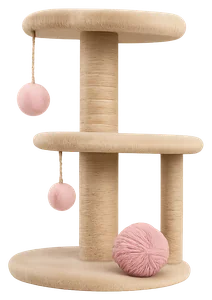
What should you look for in a cat tree?
- Stability. A wobbling tree scares cats and can tip. Look for a wide, heavy base, posts that do not sway when pushed and, for tall trees, a way to anchor to a wall.
- Size for your cat. Perches should be big enough to lie on without hanging over the edge. Large breeds such as the Maine Coon need extra-wide platforms and thicker posts.
- Height and levels. Cats like to climb and survey the room, so offer height if your space allows, with steps close enough to jump between.
- Scratching surfaces. Sisal rope or fabric on at least one tall post lets your cat stretch fully. See our scratching guide.
- Safe construction. Check that screws, staples and carpet are secure and that there are no sharp edges or small parts to chew off.
- Cleanability. Removable or washable covers are easier to maintain.
Where should you put it?
Near a window or where your family spends time is ideal. Cats want a view and company, so a tree in a spare room often goes unused.
Common mistakes
Choosing the cheapest light tree that wobbles, buying one that is too small for a large or senior cat, and placing it in a corner with no view. If you have an older cat, pick a tree with low steps.
How big a cat tree do you need for a large or multi-cat home?
Cats over about 12 lb (5.5 kg), including most Maine Coons, need heavy-duty posts, wide platforms and a broad base. In a multi-cat home, choose a tree with several perches at different heights so cats can avoid each other instead of competing for one spot.
How do you introduce a cat to a new cat tree?
Put it next to a spot your cat already likes, then sprinkle treats or catnip on the lower levels and play with a wand toy around it. Let your cat explore at its own pace and never lift it onto the tree. Once the tree smells familiar, most cats claim it.
When should you replace a cat tree?
Replace or repair it when posts wobble, platforms sag, the sisal is worn down to the core or carpet is peeling. A damaged tree is a fall and injury risk.
Are cat trees good for scratching?
Yes, if at least one post is tall, sturdy and wrapped in sisal or similar material. If your cat still scratches the sofa, add a separate scratcher beside it. See our scratching guide.
Ready to browse?
We do not test or rank products. Use the criteria above to compare options.
Search Amazon for cat tree (opens in a new tab)We do not currently earn commission from this link. Affiliate disclosure