British Shorthair at a glance
- Origin
- United Kingdom
- Size
- Medium to large: roughly 8–17 lb (3.6–7.7 kg), males larger
- Coat
- Short, very dense, brush weekly
- Temperament
- Calm, independent, affectionate on their terms
- Energy
- Low to moderate
- Grooming
- Low
- Known for
- Round face, plush "teddy bear" coat
What is a British Shorthair like?
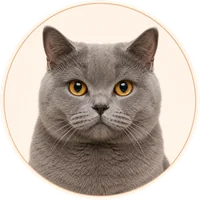
British Shorthairs are sturdy, broad-chested cats with round faces, large round eyes and a dense, plush coat. The CFA recognized the breed in 1980, although the type itself is much older. Their personality is typically calm and easygoing: they like being near their people but are often happier beside you than on top of you, and many do not enjoy being carried.
How big do British Shorthairs get?
They are medium to large, commonly somewhere between about 8 and 17 pounds (3.6 to 7.7 kg), with males heavier. They mature slowly and keep a stocky build for life.
How much grooming does a British Shorthair need?
Less than most pedigreed cats. A weekly brush keeps the dense coat in good shape, and you may want to brush more often in spring and autumn when they shed. Regular nail trims and tooth care are still important.
Do British Shorthairs gain weight easily?
They can. Their low-key lifestyle means calories add up quickly, and extra weight raises the risk of diabetes and joint problems in cats generally. Measure meals, choose a complete and balanced diet appropriate to age, and add short play sessions with a wand toy or interactive toy. Our nutrition hub explains how to read a feeding guide.
What health problems affect British Shorthairs?
Hypertrophic cardiomyopathy (HCM) occurs in the breed, and heart screening of breeding cats by echocardiogram is something to ask a breeder about. A genetic study of several breeds, including British Shorthair, advised that routine DNA testing for HCM is currently supported only for Maine Coons and Ragdolls, so there is no breed-wide gene test to rely on for British Shorthairs. Dental disease and obesity are common in many cats and worth monitoring.
Is a British Shorthair right for you?
It suits people who want a low-maintenance, quiet cat that is comfortable alone during the workday. If you want a more demonstrative cat, consider a Ragdoll or Siamese.
Sources and further reading
- Cat Fanciers' Association (CFA): breed information and registration standards
- CFA: Most Popular Breeds for 2023
- OMIA: Feline familial hypertrophic cardiomyopathy (MYBPC3 tests for Maine Coon and Ragdoll)
- Frontiers in Veterinary Science (2024): Classification of feline HCM-associated gene variants
- Cornell Feline Health Center: veterinary health information for cats