Persian at a glance
- Origin
- Historically linked to Persia (Iran); modern breed developed in Europe and North America
- Size
- Medium: roughly 7–12 lb (3.2–5.4 kg)
- Coat
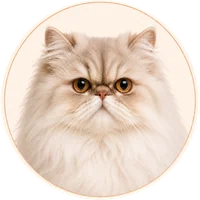
- Very long and dense, groom daily
- Temperament
- Sweet, quiet, gentle
- Energy
- Low
- Grooming
- High
- Known for
- Flowing coat and flat face
What is a Persian cat like?
Persians are gentle, quiet cats that prefer calm routines. They are rarely climbers or jumpers and are content to lounge. Most enjoy attention but are not demanding, and they do best in a peaceful, indoor home. The Cat Fanciers' Association recognized the Persian in 1906 and counts it among the foundation breeds of the cat fancy.
How much grooming does a Persian need?
A lot. The long, dense coat tangles easily, so plan on combing it every day with a metal comb and brushing right down to the skin, plus occasional baths. Wipe the face daily because the flat face often causes tear overflow and staining. If daily grooming sounds like too much, the short-coated Exotic or a shorter-haired breed may suit you better. See our grooming tips.
What health problems affect Persians?
Two families of problems come up most often. First, the flat (brachycephalic) face can contribute to watery eyes, narrow nostrils and breathing and dental difficulties. Second, polycystic kidney disease (PKD) is an inherited condition that has been identified in Persians and Persian-related cats since the late 1960s, and it can lead to kidney failure. Cats often show no signs early on. A DNA test for the PKD1 mutation is available, and ultrasound can also be used, so ask breeders for results from both parents. Persians are also among the breeds in which heart disease (HCM) has been reported.
Is a Persian right for you?
A Persian suits someone who enjoys the grooming routine and wants a quiet indoor companion. Keep the home calm, keep the litter box very clean (long fur and litter do not mix well) and book regular vet checks. A less grooming-intensive alternative with a similar calm vibe is the British Shorthair.
Sources and further reading
- Cat Fanciers' Association (CFA): breed information and registration standards
- CFA: Most Popular Breeds for 2023
- Cornell Feline Health Center: veterinary health information for cats
- Persian and Persian-related cats: PKD1 mutation prevalence study (Brazilian Journal of Biology)
- Molecular detection of polycystic kidney disease in Persians (J Feline Med Surg Open Reports, 2022)